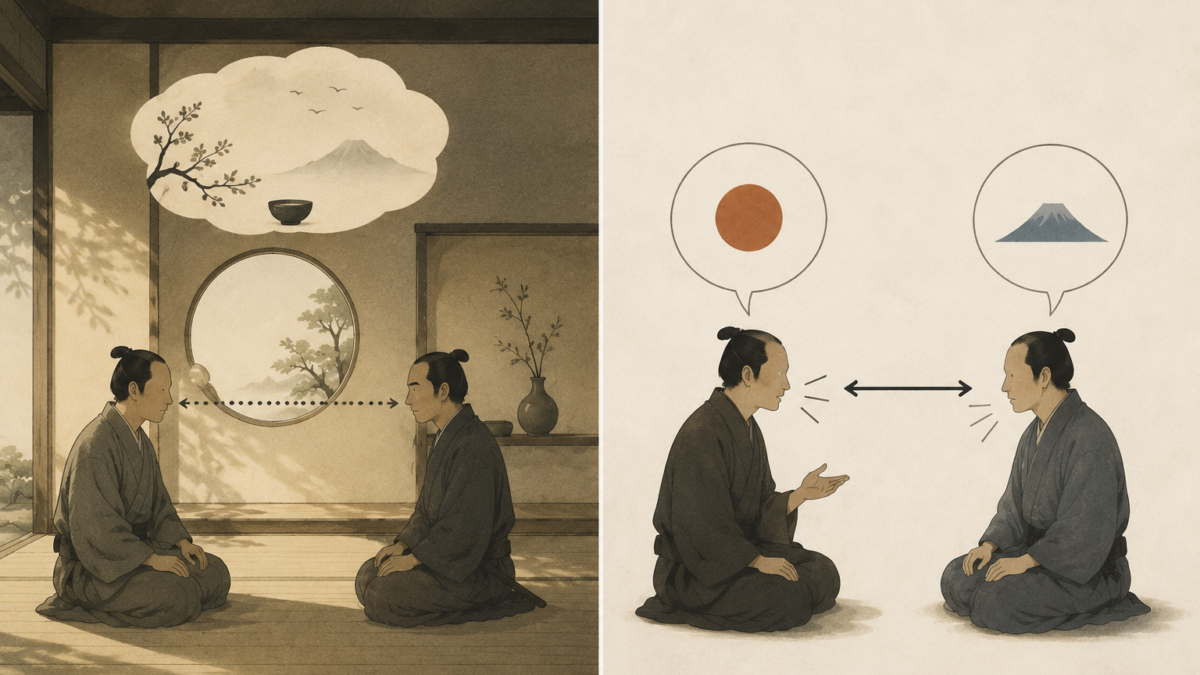
If you’ve ever visited Japan or worked with Japanese people, you may have wondered:
- “Why don’t they just say what they mean?”
- “Did they just say yes… or was that actually a no?”
- “Why is everyone so indirect?”
The answer lies in one important cultural concept: Japan is a high-context culture.
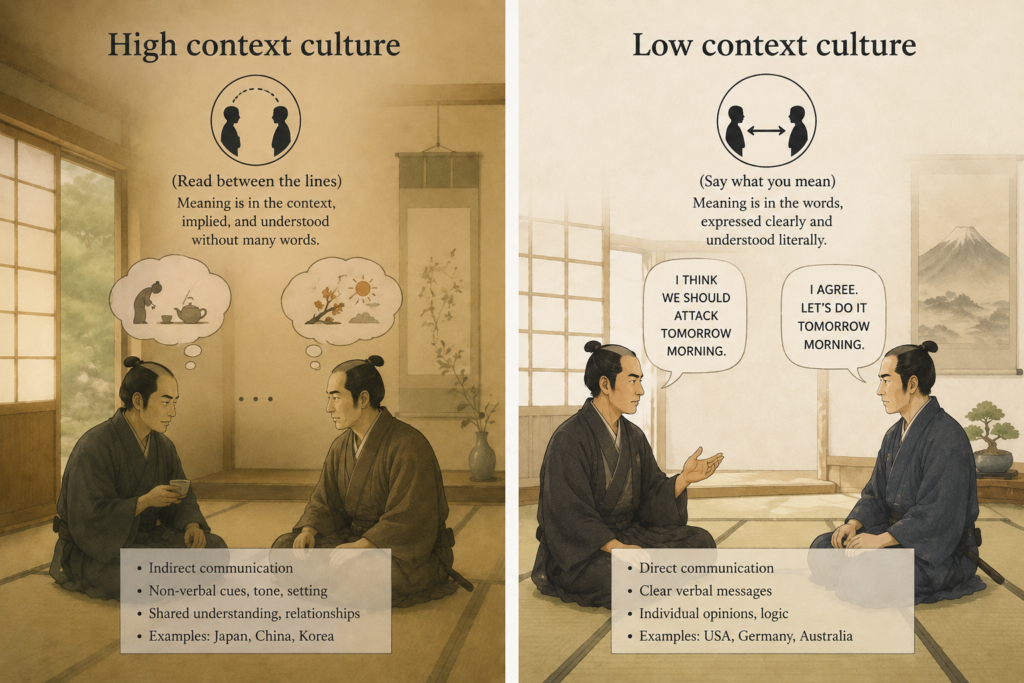
What Is a High-Context Culture?
In a high-context culture, people don’t rely only on words to communicate.
Instead, they also pay attention to:
- the situation,
- facial expressions,
- tone of voice,
- relationships,
- and the atmosphere.
In other words, what isn’t said can be just as important as what is said.
For example, when a Japanese person says:
- “That might be a little difficult…”
- “I’ll think about it.”
- “Maybe next time.”
they may actually be politely saying “No.”
This can be confusing for people from countries where communication is more direct.
What Is a Low-Context Culture?
Countries such as the United States, Canada, Germany, Australia, and many others are generally considered low-context cultures.
People are encouraged to express their opinions clearly and directly.
Instead of hinting, they are more likely to say:
- “Yes.”
- “No.”
- “I disagree.”
- “I can’t.”
Neither style is better than the other—they simply reflect different cultural values.
Understanding Japan Becomes Much Easier
Once you understand high-context communication, many everyday situations in Japan suddenly make sense.
Why do people avoid saying “no” directly?
Why do meetings sometimes end without a clear answer?
Why do Japanese people often apologize even when something isn’t their fault?
All of these behaviors are connected to the same communication style.
If you’d like to dive deeper, these two topics explain it even further:
- What Does “Reading the Air” Mean in Japan? (Learn why Japanese people pay close attention to the atmosphere and social harmony.)
- Honne and Tatemae: The Difference Between True Feelings and Public Behavior (Discover why people sometimes say one thing while feeling another.)
Understanding these concepts will help you communicate more comfortably with Japanese people—and appreciate the culture from a whole new perspective.