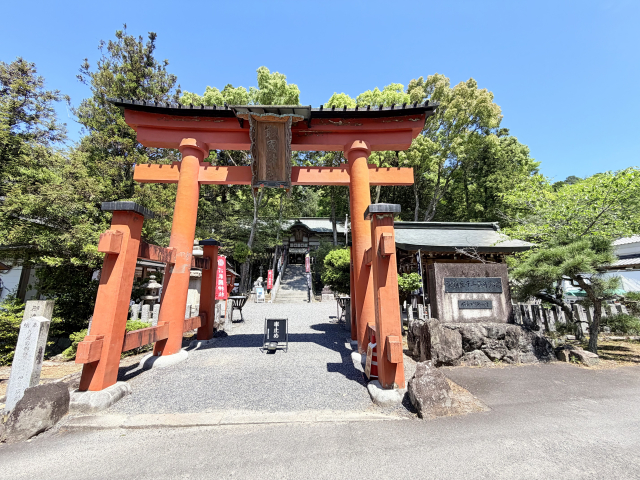
1. Shinto (神道) — The Beauty of “Eight Million Gods” and “Purity”
Japan’s indigenous religion, Shinto, is rooted in animism—the belief that the divine resides in all natural things.
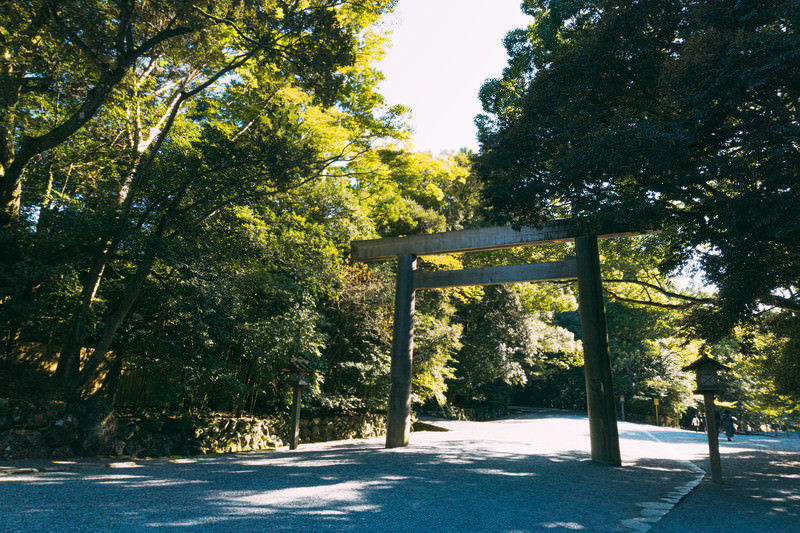
- Key Characteristics: Shinto celebrates loving nature as it is, without over-manipulating it with human intervention. Furthermore, derived from the concept of purifying spiritual impurities (kegare), it places extreme importance on purity, pristine whiteness (innocence), and freshness. The simple wooden architecture of Ise Jingu Shrine and the layer of white gravel (tamajari) spread across shrine grounds are iconic symbols of this Shinto cleanliness.
2. Zen (禅) — The Beauty of “Subtraction” and “Negative Space”
Zen, a school of Buddhism introduced from China during the Kamakura period, dramatically refined Japanese aesthetics into a minimalist form.
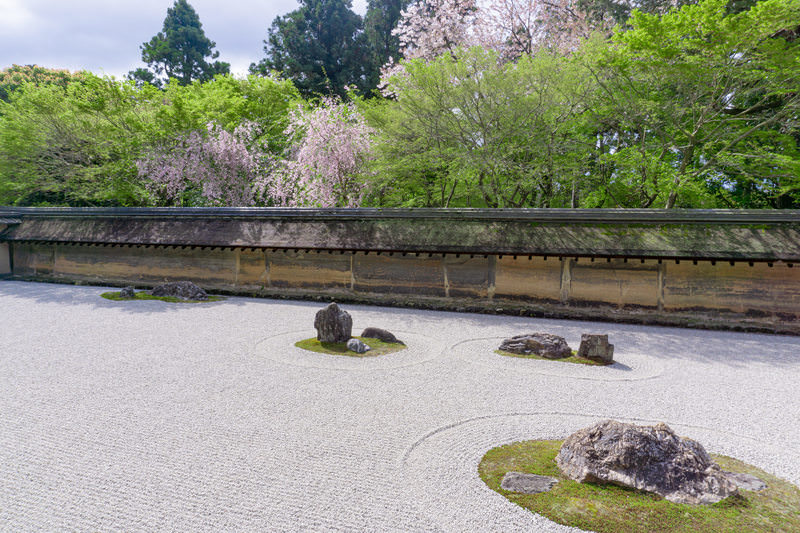
- Key Characteristics: It pursues essential beauty by stripping away every last unnecessary detail. The dry landscape garden (karesansui) at Ryoan-ji Temple is a prime example. By expressing the universe and nature using only sand and stone—without a drop of water—it leaves an intentional “negative space” (yohaku) to rely on the viewer’s imagination. This evokes spiritual richness rather than material wealth.
3. Wabi-Sabi (侘・寂) — The Beauty of “Imperfection” and “Aging”
Mastered within the Japanese tea ceremony by figures like Sen no Rikyu, Wabi-Sabi is a world-renowned, unique aesthetic born from the fusion of Shinto’s sense of impermanence and Zen’s simplicity.
- Key Characteristics:
- Wabi (侘): Finding spiritual fulfillment within insufficiency and simplicity.
- Sabi (寂): The deep beauty that resides in things that have grown old, faded, or weathered over time.
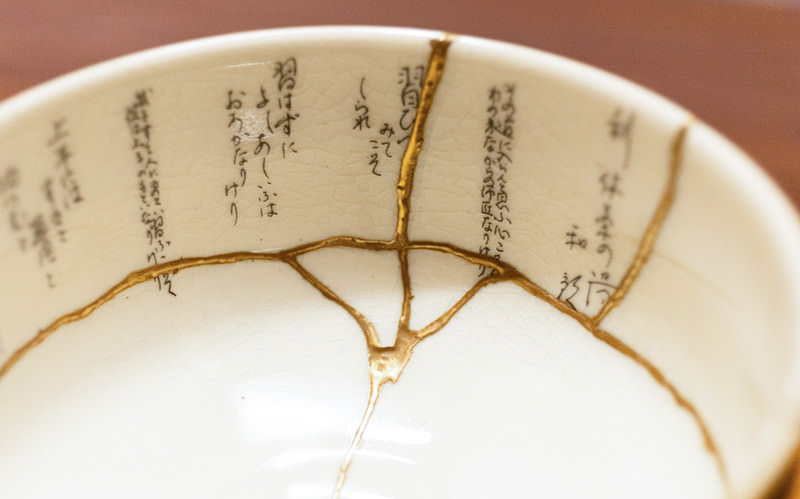
- “Kintsugi” (pictured above)—the art of highlighting cracks in broken pottery using gold—is a pure symbol of the Wabi-Sabi spirit. It treats damage not as a flaw to be hidden, but as an indispensable, unique part of the object’s history and beauty.
4. Mono no Aware (物の哀れ) — Empathy for the “Transience of Things”
This uniquely Japanese, poetic aesthetic runs deep within Heian-period court literature, such as The Tale of Genji.
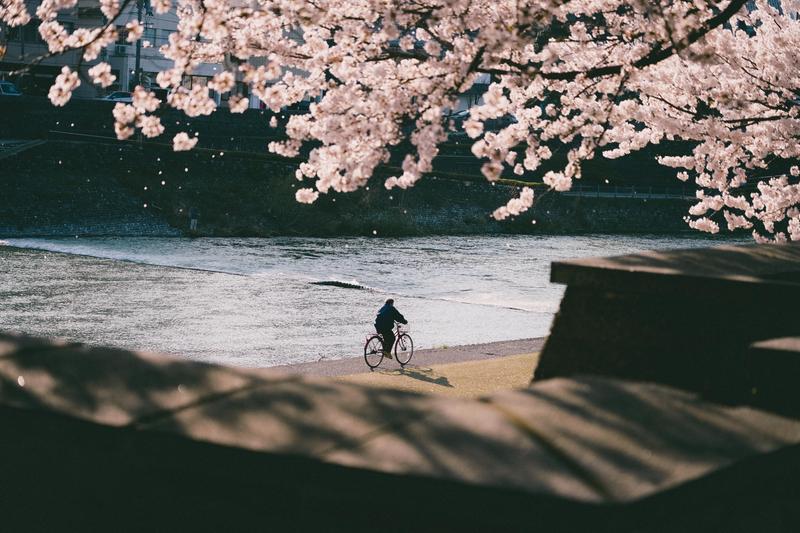
- Key Characteristics: It refers to an emotional resonance with transience—accepting that all physical forms eventually break and change, and feeling deeply moved by that fleeting impermanence. The feeling of being moved more by falling cherry blossoms than by those in full bloom, or by a moon half-hidden behind clouds rather than a brilliant full moon, stems entirely from this concept of Mono no Aware.
5. “Ma” and “In’ei” (間・陰翳) — The Beauty of the Unseen
While Western aesthetics often favor casting light to make everything clear or filling space with decoration, Japanese aesthetics find beauty in what is intentionally kept unseen and left unsaid.
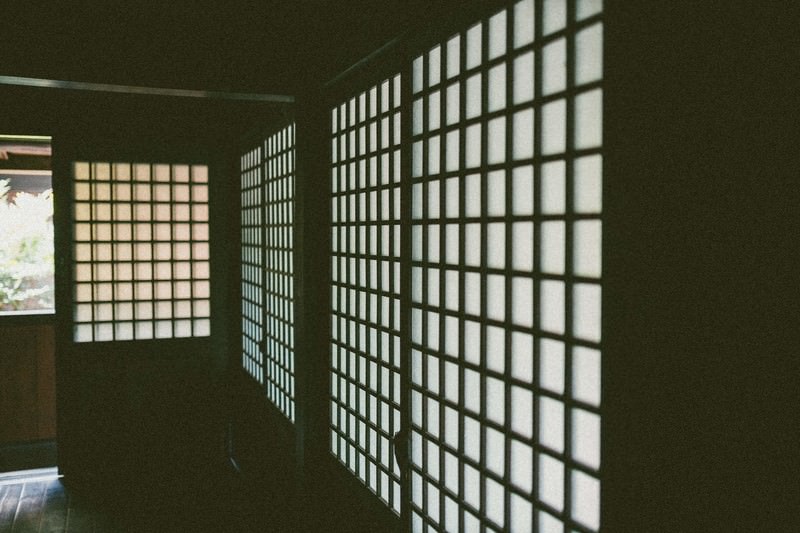
- Key Characteristics:
- Ma (間 / Space & Pause): The pauses in music, the negative space in paintings, or the silence between words in conversation. It is believed that meaningful depth resides within empty space and time.
- In’ei (陰翳 / Shadows & Light): Expressed in Jun’ichiro Tanizaki’s In Praise of Shadows, this is the sensibility that Japanese beauty—such as the luster of lacquerware or the subtle shadows on tatami mats—shines most brilliantly within darkness, faint light filtered through paper screens (shoji), and gradations of shade.
Note: These foundational principles of Japanese aesthetics serve as the original prototype for modern Japandi style and traditional Japanese furniture.